Showing posts with label adventure. Show all posts

Tuesday, May 3, 2022

Southwest AdVANtures: Day 5

Day 5, Wednesday, March 2nd

photo cred: Frank

photo cred: Frank

If you want to start back at Day 1, click here.

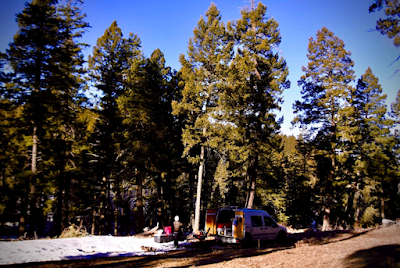
Although it can be dangerous navigating new lands at night, there is something kind of cool about arriving in darkness then waiting until morning for the site to be fully revealed. This site in Cloudcroft, New Mexico, was AMAZING. It was a dirt pullout within the Lincoln National Forest, situated in the Sacramento Ranger District, near the Sleepy Grass Picnic Area, just off Apache Canyon Road. In the light of day, we could see the mountain ranges along the horizon, and realize just how high up we were (something like 8,500 feet). Upon getting the full scope of this landscape, we knew this would be another few-night spot. If you'd have told me our first stop in New Mexico would be snowy, mountainous, and covered in Juniper and Pine, I wouldn't have believed it. This was far from the barren, flat, dusty, monotone desertland I had imagined, and I Loved it.

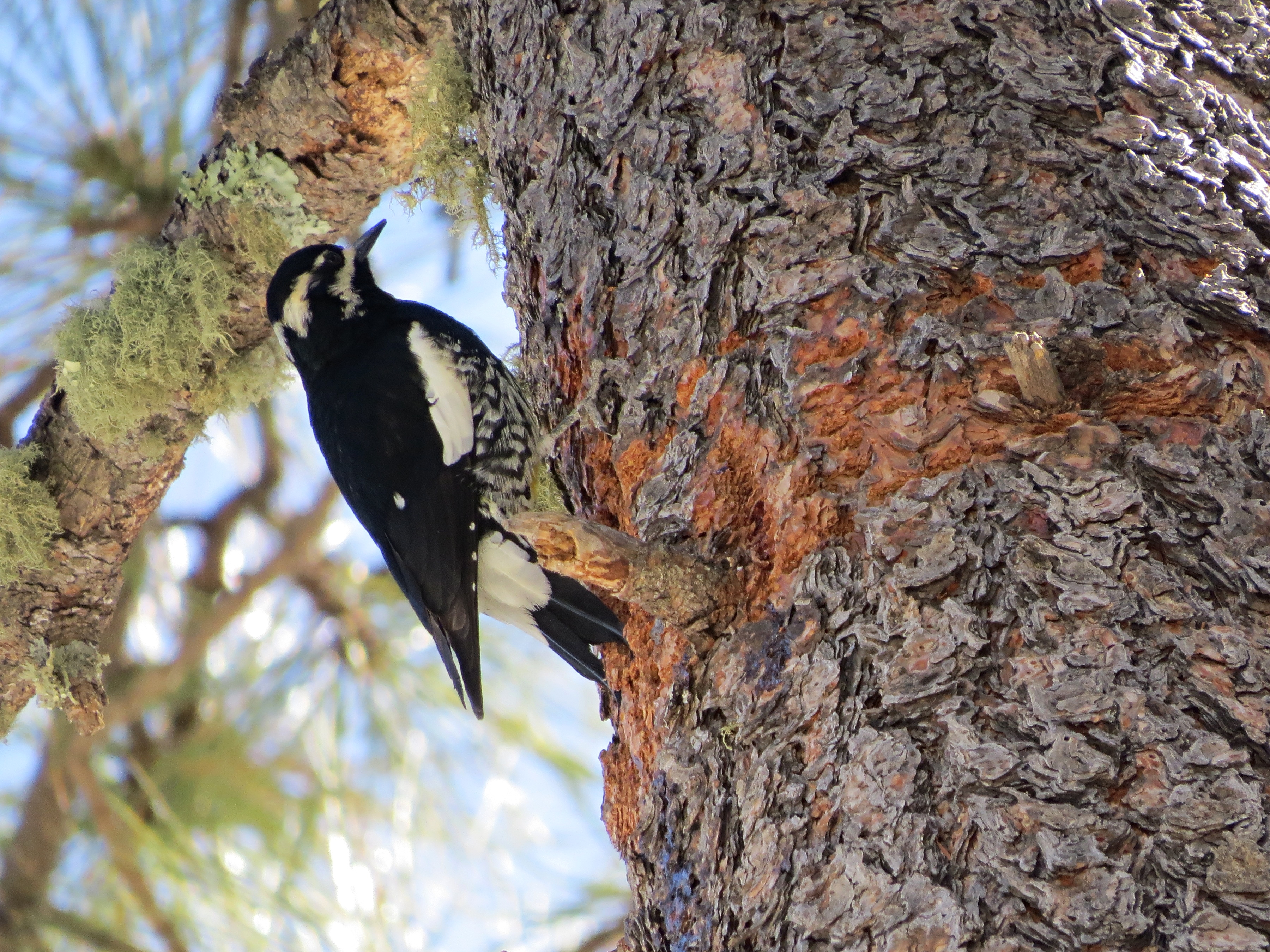
The morning birdsong was bustling, revealing a few more life birds: Pygmy Nuthatch, Mountain Chickadee, and the stellar Steller's Jay - what a beautiful bird (though, true to jay form, a raucous, talkative sort). We took a few short hikes and a bit of stationary birding, to which Frank was quite dedicated, and I was quite impressed! More bird discoveries included the dapper Williamson's Sapsucker, Red-naped Sapsucker, a heard-only Northern Pygmy-Owl, and, not a lifer, but still cool, a single Red Crossbill. We also saw some sort of cat we first misidentified as a bobcat, but then, realizing it had a longer tail, wondered if it could've been a mountain lion. We settled on "I don't know," because it was dark in color and seemingly smaller than a mountain lion, but much larger than the average house cat. I believe it's alright to let some things remain mysteries. On a more certain note, we watched wild horses and groups of Mule Deer roaming through our campsite. It was another amazing day feeling relaxed, connected, and full of wonder.

Mountain Chickadee
Steller's Jay
Williamson's Sapsucker

Red-naped Sapsucker

Sleeping Spot: Near Sleepy Grass Picnic Area, off Apache Canyon Road, Sacramento Ranger District of the Lincoln National Forest, Cloudcroft, New Mexico

New Birds: Pygmy Nuthatch, Mountain Chickadee, Steller's Jay, Williamson's Sapsucker, Red-naped Sapsucker, Northern Pygmy-Owl

Other Notable Wildlife: Red Crossbill, wild horses

Wednesday, April 27, 2022

Southwest AdVANtures: Day 4

Day 4, Tuesday, March 1st

photo cred: Frankie
If you want to start from Day 1, click here.

After two nights in Oklahoma, we were ready to hit the road again. We took one last peaceful sit on the rocks along the river, then spotted a few more birds, including vultures, Kestrels, and Eastern Meadowlarks.

Black Vultures
Eastern Meadowlark
Today's plan was to exit Oklahoma, enter Texas, and end up in the Lincoln National Forest in New Mexico. The drive through Oklahoma and Texas brought flat, mostly-brown farmland, tons of cows, and a prolific amount of roadside raptors perched atop fenceposts and trees. During one stretch, Loggerhead Shrikes seemed to decorate the telephone wires, each bird evenly spaced a few minutes' drive past the last. As we were almost through Texas, the scenery started to change again, gaining color and texture. Some of those browns gave way to washed-out greens, paving the way for rock formations that grew steadily taller. This visual shift recharged us.

the drive

Texas doodles

Once we entered New Mexico, "The Land of Enchantment", we stopped at a second Planet Fitness for another workout and shower. Next, we visited a grocery store to stock up on food and water. We drove another few hours, where we spotted our lifer (first-ever sighting) White-winged Doves and a dead hog of some kind (possibly a Peccary/Javelina?). Unfortunately, dead things don't really count as "lifers". RIP, pig.

photo cred: Frank

As the sun faded and more mountains loomed into view, we realized the Lincoln National Forest was going to be set within and atop those mountains, a fact we hadn't thought to consider when choosing our camping spots. Undeterred, though slightly nervous about the conditions (darkness, ice, snow, deer, and whether camping was even accessible this time of year), we forged on. This was a slightly treacherous drive, though in retrospect, an exciting one. We saw Mule Deer and a female Elk, HUGE, bearded, and so close to my side of the car I could've reached out and touched her. Apparently, when it comes to deerlike animals, Elk are only second in size to Moose.

We continued to creep up the mountainside, following my lonely GPS pin. The closer we got, the more unsure we became about the passability of those snowy, narrow roads. Just about half a mile shy of our marker, we abandoned the plan, turned around, and settled for a safer area close by. When my nerves settled and we got out of the car, we realized this was an epic spot. Yes, we were probably the only ones camping up here. Yes, there was still snow on the ground. However, much of that snow had begun to melt; the mountainous landscape and towering conifers were absolutely gorgeous; and the starry sky was breathtaking.

When we set up our Stargazer chairs and looked up, I realized it was the quietest place I'd ever been, as quiet as that cave in Missouri had been dark. I had to fight to keep my tongue, teeth, breath, and heart from making sounds, so as not to break the vastness of that silence. It came to me then that all those bodily sounds are things we usually never hear in our noisy home lives. I thought to myself, "Sometimes, you have to get away from the noise of the world in order to hear yourself again."

Sleeping Spot: Near Sleepy Grass Picnic Area off Apache Canyon Road, Sacramento Ranger District of the Lincoln National Forest, Cloudcroft, New Mexico

New Birds: White-winged Dove

Other Notable Wildlife: Mule Deer, Elk

Tuesday, April 26, 2022

Southwest AdVANtures: Day 3

Day 3, Monday, February 28th

amethyst & palo santo
If you missed Days 1 & 2, start here.

Waking up along the Blue River, we could see just how amazing the spot was. We definitely wanted to stay longer than just overnight. The river itself is actually one of the largest free-flowing streams in Oklahoma, unassisted by manmade structures or interventions. The Nature Conservancy owns a preserve along the banks called "Oka' Yanahli", or "water flowing" (in Chickasaw).
Blue River (Frank's pic)
my pic
Throughout the day, an epic amount of Turkey Vultures and Black Vultures glided overhead, suspended between the clouds and treetops. We had a relaxing day reading, napping, birding, hiking, and in Frank's case, fishing. There were rapids, beautiful views, and lots of rock outcroppings to climb. At one point, I took off my shoes and stuck my feet in the red-skin-making water, stepping over lichen and under rippling water until I shimmied up a sizeable tree trunk. Barefoot and climbing up a tree always makes me feel more like myself.
When darkness fell, we settled in for more stargazing and fireside relaxation. A Barred Owl called from a distance, while nearby, another visitor was about to appear. We were deep in campfireside conversation, when suddenly, we heard a rustling in the leaves nearby. We took out our flashlights and followed the sound until we caught glimpses of a little white possum-like creature scurrying about, which we soon identified as an armadillo (a Nine-banded Armadillo, specifically). This was a first for both of us, and our consensus was - it was adorable!

I did a little research to uncover the spiritual symbolism and scientific background about this creature. Both proved fascinating. As for the former, the animal is said to represent digging down to the heart of a matter, probing toward the truth, sensing, exploration, self-protection, and rest. These themes really fit in with the conversations we'd just been having. As for the scientific bit, some facts to follow... Armadillos excavate and maintain up to 15 burrows each. Instead of rolling up into a ball when scared, as many people might imagine, these guys actually jump straight up and take off running. They almost always have four babies per litter (same sex quadruplets). Aside from all their burrow building, digging, and jumping, armadillos sleep for most of the day (about 16 hours). Finally, they make this sort of ungodly scream, which we soon heard ringing out in the dark woods (to which we acted like those people in scary movies everybody yells at; you know, the ones who go investigating toward the horror).

What a magical sighting to top off a beautiful day!
photo cred: Frank

Sleeping Spot: Blue River Fishing & Hunting Area, Tishomingo, Oklahoma (PROs - the river itself, not many people around/privacy, all those vultures and other wildlife, great rocks to sit and climb on, nice areas for hiking, birding, fishing / CONs - no major ones to speak of!)

Notable Wildlife: Nine-banded Armadillo

Thursday, April 21, 2022

Southwest AdVANtures: Days 1 - 2

My boyfriend, Frank, and I just recently had the adventure of a lifetime, something we'd both only dreamt of until this point. We spent an entire month living in our converted Ford Transit Connect, traveling around the country, sleeping on public lands and in national forests, and exploring the American Southwest. I documented as much as I could in real-time, but later had to add photos and make tweaks, which made the whole thing quite a massive document. I've broken down these reflections into smaller sections which I'll be sharing here, with up to a few days' entries per post. I hope you enjoy these recollections of our adVANtures, and remember, we all have the power to discover beauty and magic every day. Sometimes, the scale is not as big, but it's up to us to feel the wonder anyway.


Day 1, Saturday, February 26th

This was it, our long-awaited departure date. Big events don’t really sink in for me until they’re about to happen, so the whole idea that we were leaving home for a month to travel around the country finally hit; it hit me hard. To soften the nerves and get our bodies moving, we decided to start the day with yoga at our home studio, More Than a Mat. This was a good call, for day one was going to be all about driving and covering lots of ground. We were eager to get down to those new-to-us, unchartered southern territories. We did our yoga, followed by our final packing and organizing, then said our goodbyes to the kitty boys (and again… oh, and one more time).

Finally, it was time to leave. I did a little blessing over our van like my grandma used to do before our family road trips. Frank read a prayer he authored, and it was beautiful and made me cry; that, combined with the whole “leaving the kitty boys and home and everything familiar for a month” thing, but it was all good. We needed to leave the familiar. Sometimes the familiar feels so safe, but not so… alive.

Day one included lots of driving, but our stopping point changed from the original plan. Our first thought had been to drive to Mark Twain National Forest in Missouri. Instead, we decided to keep it direct, skipping any long stays until we got further south. We drove from around 11:30 a.m. to 8:30 p.m., then found a Planet Fitness in Indiana where we got in a little movement, a shower, and a quick bite to eat. After that, we drove another few hours, until exhausted, rolled into a Walmart parking lot in Rolla, Missouri. It was there we slept for the night, our mission to cover ground successful.

Sleeping Spot: Walmart, Rolla, Missouri (PROs - no one bothered us, it was easy / CONs - obviously not a "real" campsite, but fine for this leg of the trip)


Day 2, Sunday, February 27th

The next day, we woke up, promptly found a coffee shop for our caffeine fix, then headed back on the road. Our plan was to drive to Arkansas and stop somewhere for the night, but after revisiting the iOverlander camping app, I discovered a spot in Tishomingo, Oklahoma that looked promising. This spot, the Blue River Fishing and Hunting Area, was rated by one of the app users as “the best free camping spot in Oklahoma”. I believe the claim now, but more on that later. With the new coordinates plugged in, it’d be another long traveling day, but we were ready. We drove deeper into beautiful Missouri, that place where the Midwest so gracefully shakes hands with the South.

We kept seeing signs for a place called Fantastic Caverns. Frank lightheartedly asked, “Should we go?” which I first dismissed but then started to ponder. I looked it up online and the pictures and reviews looked amazing. It’s the only drive-through cave tour in the country, and the caves are vast and expansive, with beautiful formations of different shapes and sizes. We decided to go for it, be spontaneous and adventurous! We weren’t going to be slaves to some arbitrary agenda. Why should we? While I had some anxieties about being crammed into a small space, in a small vehicle, with a bunch of other people, I still felt excited over facing that fear and seeing something beautiful. Frank cheered me on, as did my older brother, via text, who gave me this advice, “Clear your mind, or what I call ‘taking a recess of the shitty committee’.” I like that.

The caves were amazing. Frank bought an amethyst crystal from the gift shop, which we read apparently has properties meant to stave off alcoholism and encourage sobriety. I’ve also heard it’s tied to themes of water, flow, and the astrological sign of Pisces (which we were in the midst of). In the cavern, our guide did this thing they did when I went to Mammoth Caves a few years back. They turn off the lights for a moment and allow you to see the most ultimate darkness you’ve never seen. You can’t see anyone, anything, anywhere, anywhen, just encompassing, universal, embryonic darkness. It comforted me, and I think Frank too. The coolest part, in my opinion, was when our guide told us about the original entrants to the cave, a group of 12 teenaged girl cave explorers, who made their entry and wrote their names on the wall on none other than February 27th, 1867 (the same date we were there)! What were the odds of that!? Well, I calculated it, and they were one in 365, which weirdly ends up with another “27”, at 0.27 percent.


After the tour, we took a stroll around the grounds, following signs indicating “The Great Missouri Birding Trail”. Truthfully, it didn’t seem all that great, but it was a trail, and we enjoyed it. We found a little table in a corner in the sun and did a short meditation there. 
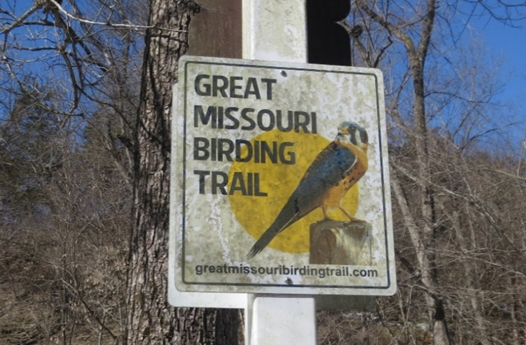
Then, it was back on road for the rest of the day. The rocky, hilly, lush lands of Missouri quickly changed upon entering Oklahoma. This state was much flatter, browner, and dustier. The whole vibe of Oklahoma was slightly forlorn and abandoned. There were smatterings of few-block towns with boarded-up businesses interspersed with gas stations and medical marijuana dispensaries. At least the abundance of cows and hawks along the roadsides and fields gave a sense of life to the land. Around 7:30 p.m., we arrived at the Blue River area in Oklahoma, though to me it felt much later. We couldn’t see all the details of the land, but we could hear a roaring river and found some really cool dispersed camping sites. In case you’re unfamiliar, dispersed camping isn’t camping in a campground with toilets, running water, or other amenities; it’s parking on National Forest or other public land. It’s free of charge, typically pretty private, and perfectly legal, as long as you follow parameters like not being too close to actual campgrounds or parks. This is the type of camping we would do for our entire trip.

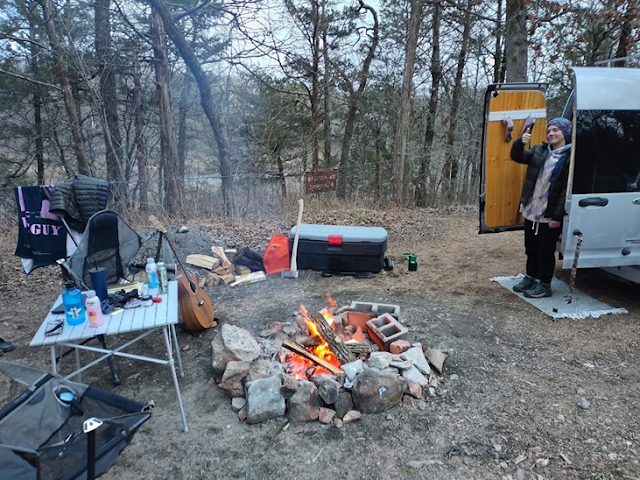
Tonight, we settled on Designated Campsite 4, which sat along that rapid river, tucked under the shade of mixed deciduous and conifer trees. We set up camp, made a fire, sat in our new Stargazer chairs to... well, gaze at the stars, then went to sleep.

Sleeping Spot: Blue River Fishing & Hunting Area, Tishomingo, Oklahoma
Sunday, November 20, 2016

Photo Journal 2016: September

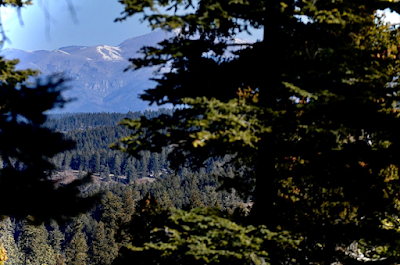
September brought new changes to my 2016 Nature Plots (3 spots I visit and photograph each week). Fall flowers bloomed, leaves held fast, and the weather remained pleasant.

Enjoy these images of the progress of my photo journal. It can also be viewed week by week and in greater detail on my Little Bird Nerd Facebook page.

September, Spot 1

Spot 1: September 2016, Weeks 36-39

September, Spot 2

Spot 2: September 2016, Weeks 36-39

September, Spot 3

Spot 3: September 2016, Weeks 36-39

Life Birds:

Just like August, September was a 5 "lifer" month (meaning, I saw 5 new birds I'd never seen before)!

The Crested Caracara (Caracara cheriwa) was my most expensive life bird to-date! This amazing bird, whose normal range typically tops off around Southern Texas, happened to get blown way off course, and ended up in Michigan's Upper Peninsula. The bird arrived months ago, but I needed to wait until my semester was over to be able to spend the time and money on this trip. Luckily, the bird hung around (and as of now, mid-November, is still there) long enough for me to make it up there! After renting a car and driving over 7 hours to a small paper factory in the little town of Munising, Jason and I were able to spot the bird within about 30-45 minutes of scanning the grounds. The bird appeared to be casually foraging for worms in a field adjacent to the paper factory. Standing over two feet high, it struck us as some strange hybrid between falcon, vulture, and chicken. The rest of the trip was spent exploring northern Michigan, but in this first hour of reaching our destination, the feelings that flooded me were indescribable.
Crested Caracara in Munising, Michigan
Golden-winged Warbler (Vermivora chrysoptera): This bird, unlike the Caracara, came unexpectedly and close-to-home. As I was making my way through the woods of my favorite local park, searching for a Gray-cheeked Thrush which had been sighted recently, quick movement at the top of a tree caught my attention. Lifting binos up to my eyes, I knew immediately that this was a Golden-winged Warbler. Even without having ever seen this bird, and not having it on my immediate "radar", there was no mistaking this striking little warbler. The black eye mask and throat, yellow cap, golden wingbars, and plain belly were classic identifiers. I felt like I'd been graced by the presence of a little bird fairy! And just as quickly as it flashed into view, it was gone. A sight for my memory only.

Gray-cheeked Thrush (Catharus minimus): As I made my way back out of the woods, giddy from the sighting of the Golden-winged Warbler, I was clued in by fellow birder Andy about a Gray-cheeked Thrush who appeared to be injured, sitting on the side of the path. I hated for my first sighting of this species to be of an injured bird, but it was cool to be able to get up-close shots of a bird which is commonly mistaken for other types of thrushes. Having these photos is an amazing educational tool for later study. And later, I passed by the bird once again and it flushed, flying deeper into the woods. Perhaps there was hope for it yet.
Gray-cheeked Thrush
The next two life birds, Glossy Ibis (Plegadis falcinellus) and Long-billed Dowitcher (Limnodromus scolopaceus), were both found along the Shiawassee wildlife drive. The Ibis was awesome because it's normally a bird found much further south. It's always a treat to be able to get a faraway bird close to home. The dowitchers were awesome because they present such a difficult ID challenge (compared to Short-billed Dowitchers). In this case, we had Long and Short-billeds together, so it was cool to be able to see them side by side.
Glossy Ibis and Ring-billed Gulls

Long-billed Dowitchers
Comparisons
Last year's January through September total species count: 202
This year's January through September total species count: 233

Sunday, January 31, 2016

Bird Nerd School is In Session!

Birding is a classroom.

Sometimes its birders that are the teachers; sometimes you seek and find the answers through reading and research. Oftentimes, the teachers are the birds themselves.

With a year and a half of birding under my belt, I've learned countless lessons from these often surprising subjects.

I'll share with you some of their secrets...

Lesson 1: Robins are not a sure sign of spring

Source: The Cornell Lab, 2016
American Robin soaking up the sun, January 2016


Many of us, including myself until about a year ago, believe the American Robin signifies spring. While it's true they are migratory birds, they can be found in Michigan year-round. In fact, I've been seeing more of them this winter than I usually ever see! I find them hanging out in small flocks, often near flocks of European Starlings. Maybe I see them more lately because their rusty breasts are easy to identify even on the dreariest, grayest
winter days. So if Robins aren't the best indicators of Michigan spring, which birds are? In my experience, Killdeer and Red-winged Blackbirds take the cake.

Lesson 2: Bird names can be confusing

Q: Those woodpeckers with red heads are called Red-headed Woodpeckers, right?

A: Yes. And no.

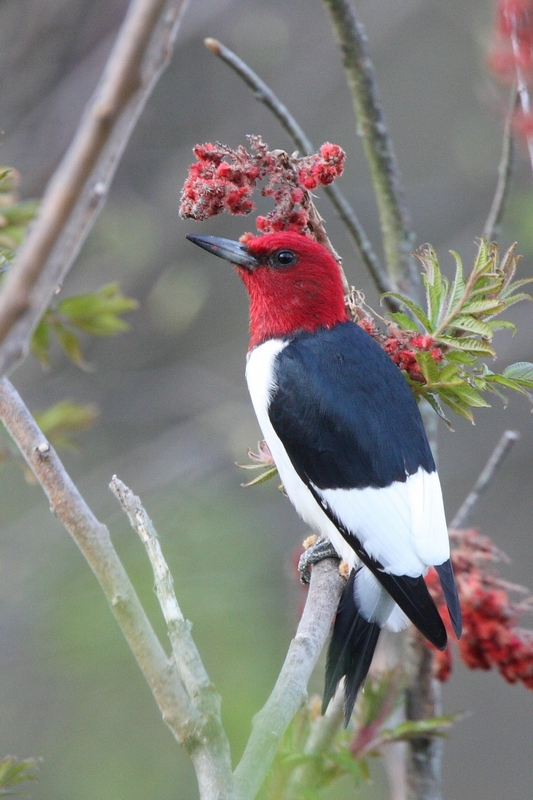
The woodpecker on the left is a Red-headed Woodpecker. The one on the right is the much more common Red-bellied Woodpecker. I suppose when it comes down to it, the Red-headed does have more extensive red on the head. Perhaps the Red-bellied should be called the Red-crowned Woodpecker, but don't let me confuse you!
Red-bellied Woodpecker (Melanerpes carolinus)
Red-headed Woodpecker eBird, 2014


Lesson 3: There is no such thing as a sea gull

Gulls are some of the most complicated and confusing birds to identify. Without a scope, lots of studying, and the assistance of more experienced gull-watching birders, identifying gulls becomes overwhelming. My life list shows just a handful of Michigan's species (Ring-billed, Herring, Bonaparte's, and Great black-backed, the world's largest gull). There are many others who visit regularly or casually, including: Black-legged kittiwake, Little gull, Franklin's gull, California gull, Thayer's gull, Lesser black-backed gull, Glaucous gull (for a more extensive list, click here). Still, nowhere in this list is there a "sea gull". Of course, sea gull is just a casual term for these open-water birds. To non-birders, this naming distinction is irrelevant, but say "sea gull" in front of a group of birders and you just might get corrected!


Lesson 4: Sounds can be deceiving

There are birds whose songs exemplify the traditional qualities of a bird song: high-pitched, melodious, and sweet. Song Sparrows, Red-eyed Vireos, Northern Cardinals, and Carolina Wrens are all good examples. Then there are other birds whose songs and calls defy expectations and confuse new birders. Consider the Cedar Waxwing (click video to hear its call) whose single-note buzz sounds more like an insect than a bird, or the Eastern Screech Owl whose call is reminiscent of a ghost or a horse (or maybe a horse's ghost). On the flip side, there are other creatures who can lead to more confusion and cannot be ID'd by any bird field guide because...well, because they aren't birds! Chipmunks and Spring peeper frogs are two such creatures.
Source: YouTube


Lesson 5:  Birding hotspots are everywhere!

Backyard Cooper's Hawk (juvenile)
A secluded path in the woods, a wide open field, a stretch of pristine shoreline; these are all obvious places to look for birds, and will often host many a feathered friend. However, sometimes the best birding can be done right in your own backyard, subdivision, school, or parking lot. I remember last winter I was on the hunt for Snow Buntings when I received a tip about a mixed flock of Snow Buntings, Horned Larks, and Common Redpolls, all three of which were life birds for me at the time. I followed the directions from the tip and was surprised to end up in a subdivision which was under construction. I guess it only makes sense that birds would be closer to home than we think. After all, this land was theirs before it was ever ours. Similar moments include: a Snowy Owl perched on a telephone pole in my work parking lot, a Cooper's Hawk sitting right in front of my deck outside my back door, Bald Eagles flying over a local mall, and Peregrine Falcons roosting on a court building downtown.

Lesson 6: Birding is best without expectations 

I'll admit, this lesson is a subjective one, but it's worth consideration. There are times when a birding excursion revolves around a target species or specific goal (i.e. driving 3 hours away to see a rare duck, or going night birding for Northern Saw-whet Owls). These can be fun adventures and exhilarating, especially when successful. However, these types of outings tend to carry a tension, an anxiety that comes with high expectations and hopes. I think to give up hope, to give up the goal, leads to a much more peaceful, satisfying experience. When you relax, let go of the need to control the outcome, and open your eyes, ears, and mind to whatever is present, the beauty of the moment becomes more evident (whether due to an uncommon sighting, a beautiful common bird, or the peace that comes with a walk in the fresh air). Interestingly enough, it is often just after releasing expectations that a memorable sighting takes place. ABA's blog features a recent post by Lynne Barber, who seems to feel the same. She says, "The higher our expectations of what bird(s) we strongly want to see, the more we also risk our birding becoming a win or lose situation... It is my theory that it is only the people who can stand to 'fail' in their bird chases will keep birding long term" (click here for full article).

Baby Killdeer, Spring 2015
Birding is a classroom,
A field of study from which you do not graduate;
only progress
and learn
and teach others along the way.

Thursday, November 12, 2015

9 Ways Birding Has Changed my Life


My favorite tail-less Red-winged Blackbird female

I’m a birder- irreversibly, obsessively, and unashamedly taken with birds. 

As Tom Heatley (local Michigan birder and #14 on the 2014 ABA United States Top 50 list) says, “Birding is a disease, and the only cure is more birding!” Throughout the past year, I have discovered and fallen in Love with this passion. I refrain from calling it a hobby because its effects are more profound. If I listed all the ways, it would be the stuff of a novel not a blog post, so instead, here are 9 of the ways birding has changed my life:


#1) A Calm in the Storm
Birding has allowed me to fight some tough battles, including addiction. There have been times I wanted to be free but didn’t know how to fight through the hard stuff. On days I felt tired, sick, or anti-social, birding allowed me to more willingly exist in that uncomfortable space. The calming effect of nature, the fresh air in my lungs, and the overwhelming realization of the beauty surrounding me all bring peace that nothing else can.
#2) Zen
A few years ago, I discovered meditation through running, pushing through physical discomforts and rising above the body. Birding has produced a similar effect, except with birding I can actually be still. I can easily spend hours on end, walking through the woods and sitting under trees, never considering time until the sun begins to set. As I embrace the values of patience, stillness, and an openness of the mind and senses, birding hours seem like minutes to me. In the Buddhist tradition, the forest is considered a special place for enlightenment, for within it “there is only the ever-present possibility of events, encounters, and insights that emerge directly from reality itself, pure and unpolluted by human wants, expectations, and attitudes. Uniquely in the forest, the most radical of all human journeys can take place” (excerpt from Reginald A Ray’s Touching Enlightenment: Finding Realization in the Body). I feel this too.
#3) Constant Wonder
When I began to get serious about birding, I realized how many local birds I had never seen before. These birds had been living nearby or passing through the area since long before I was born, yet I had never noticed them. Each new bird is a moment of realization, a chance to be curious, amazed, attentive, and aware. Sometimes it isn’t even the new birds that excite me, rather a close encounter, a great photo, or an unusual behavior. Birding keeps me on my toes and keeps me looking up (double meaning intended).
#4) A Break in Routine
Birding changes the landscape of days and lessens the divide between the workweek and the weekend. I’ve never subscribed to the idea of “The Grind”, of working Monday through Friday 9-5 and wishing it all away. I live my life for the day, even if it’s Monday. After all, every day is a new chance for adventure!

#5) A Network of Friends
Kevin R., Jeff S., and me (Photo courtesy: Paul Poronto)
Here I am, one full year into birding, and I’ve somehow managed to meet and befriend more people than I ever have in a single year. Through eBird, walks in the park, and a string of serendipitous events, I have quickly built up a network of birder friends who could also be described as family. These birders have welcomed me into their homes, taken me under their wings on road trips across Michigan, and shared with me anything I need including: toe warmers, extra gloves, bug spray, sunblock, snacks, equipment, books, hugs, and most importantly, an endless stream of knowledge. We don’t always have to be together but when we are, we pick up right where we left off, somewhere between the wingbeats.
#6) A Breath of Relief
I never had a clear plan for my career. I used to spend many days worrying over my lack of conviction. I felt directionless, lost, and envious of those who knew what they wanted to do with their lives. To be honest, I am still quite uncertain about my career goals, but now the not-knowing doesn’t bother me as much. I found what fills my heart with joy and discovered something in birding from which nothing can detract. Blogging about birds has been a recent development. It has given me hope that my marketing education and birding passion can in fact be linked. If I can use my degree to share my passion, that would be the best-case scenario. Until then, I can be at peace with the uncertainty because I find peace in birds.
#7) A New Role
While I’ve always been an avid reader and sponge for knowledge, I have never considered myself a good teacher. Anyone who has witnessed my teaching attempts would understand this, as I often stutter through explanations and make up words as I go. I am very much an introvert who prefers to lead by example rather than explain something. However, birding seems to be the exception. This passion has given me an entirely new identity. People now come to me with their bird questions and sightings because they know I will be interested and will provide feedback. I find myself surprised at my willingness to offer information, reach out to others, and yes, even teach others about birds. To be depended upon in that way feels like a sign of maturity and an indication I have something meaningful to offer.
#8) A Test of Limits
Birding may sound like the antithesis of adrenaline-seeking, but for me, it has been the motivation to broaden my horizons and test my limits. Consider last winter when Kevin (my friend and fellow birder) and I spent hours trudging through snow in frigid temperatures. We were searching for Long-eared Owls who had been spending time in a particular patch of trees. As soon as we were enveloped in that dark canopy of conifers, standing right underneath an impossibly camouflaged Long-eared Owl, there was simply no other place to be. Alternately, I have never been on a plane and am still terrified at the idea. Still, despite my fear, I know one day I will want to expand my birding horizons and visit birds that would never reach Michigan. I find it fitting that birds will most likely be my incentive to fly.
#9) Natural Connection
While birds are often the main subjects of my adventures and photos, they are not the only creatures with whom I have connected. I have always loved nature and the outdoors, but now I feel even more connected to it and aware of it. More and more, I find myself a keeper, collector, and protector of nature. I save centipedes; allow spiders to crawl on my hands; pick wildflowers; collect rocks, leaves, and shells; and eat wild berries. Some days the birding is slow, but there is always, always something beautiful to be seen.

The following is an excerpt from a book that speaks to my soul, a book called Women Who Run with the Wolves: Myths and Stories of the Wild Woman Archetype, by Clarissa Pinkola Estés, Ph.D. In this passage, Estés discusses the effects of the Wild Woman, or true feminine nature:
Silver-spotted Skipper (Epargyreus clarus)

These transient ‘tastes of the wild’… come both through beauty as well as loss, that cause us to become so bereft, so agitated, so longing that we eventually must pursue the wildish nature. Then we leap into the forest or into the desert or into the snow and run hard, our eyes scanning the ground, our hearing sharply tuned, searching under, searching over, searching for a clue, a remnant, a sign that we have not lost our chance. And when we pick up her trail, it is typical of women to ride hard to catch up, to clear off the desk, clear off the relationship, clear out one’s mind, turn to a new page, insist on a break, break the rules, stop the world, for we are not going on without her any longer… When women reassert their relationship with the wildish nature, they are gifted with a permanent and internal watcher, a knower, a visionary, an oracle, an inspiratrice, an intuitive, a maker, a creator, an inventor, and a listener who guide, suggest, and urge vibrant life in the inner and outer words.