Showing posts with label birding. Show all posts

Tuesday, May 3, 2022

Southwest AdVANtures: Day 5

Day 5, Wednesday, March 2nd

photo cred: Frank

photo cred: Frank

If you want to start back at Day 1, click here.

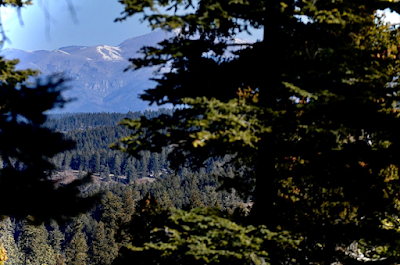
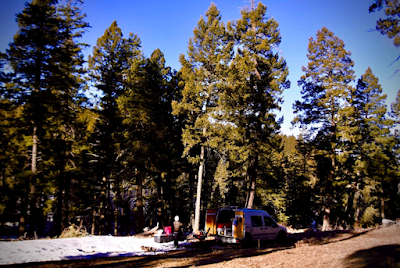
Although it can be dangerous navigating new lands at night, there is something kind of cool about arriving in darkness then waiting until morning for the site to be fully revealed. This site in Cloudcroft, New Mexico, was AMAZING. It was a dirt pullout within the Lincoln National Forest, situated in the Sacramento Ranger District, near the Sleepy Grass Picnic Area, just off Apache Canyon Road. In the light of day, we could see the mountain ranges along the horizon, and realize just how high up we were (something like 8,500 feet). Upon getting the full scope of this landscape, we knew this would be another few-night spot. If you'd have told me our first stop in New Mexico would be snowy, mountainous, and covered in Juniper and Pine, I wouldn't have believed it. This was far from the barren, flat, dusty, monotone desertland I had imagined, and I Loved it.

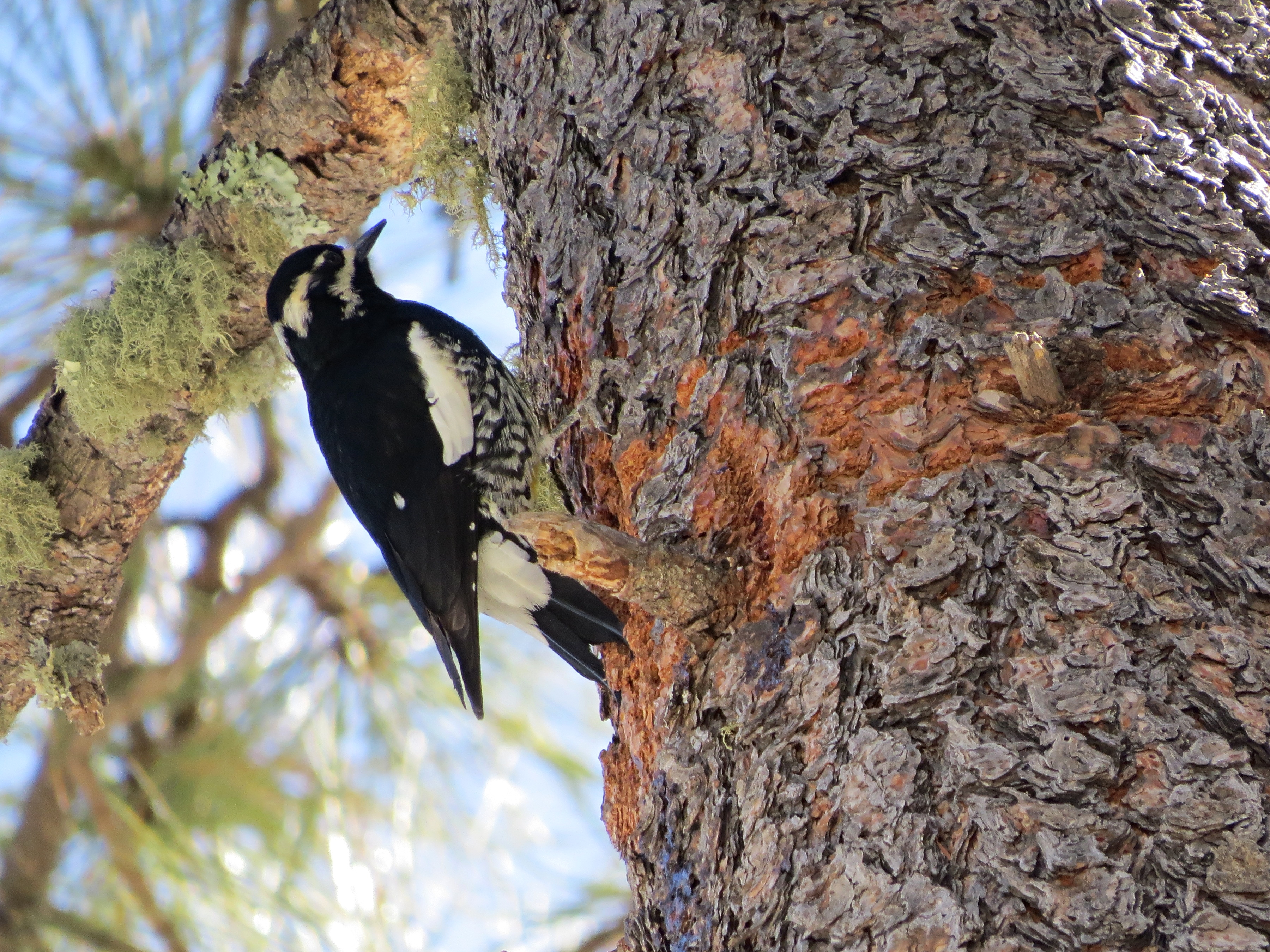
The morning birdsong was bustling, revealing a few more life birds: Pygmy Nuthatch, Mountain Chickadee, and the stellar Steller's Jay - what a beautiful bird (though, true to jay form, a raucous, talkative sort). We took a few short hikes and a bit of stationary birding, to which Frank was quite dedicated, and I was quite impressed! More bird discoveries included the dapper Williamson's Sapsucker, Red-naped Sapsucker, a heard-only Northern Pygmy-Owl, and, not a lifer, but still cool, a single Red Crossbill. We also saw some sort of cat we first misidentified as a bobcat, but then, realizing it had a longer tail, wondered if it could've been a mountain lion. We settled on "I don't know," because it was dark in color and seemingly smaller than a mountain lion, but much larger than the average house cat. I believe it's alright to let some things remain mysteries. On a more certain note, we watched wild horses and groups of Mule Deer roaming through our campsite. It was another amazing day feeling relaxed, connected, and full of wonder.

Mountain Chickadee
Steller's Jay
Williamson's Sapsucker

Red-naped Sapsucker

Sleeping Spot: Near Sleepy Grass Picnic Area, off Apache Canyon Road, Sacramento Ranger District of the Lincoln National Forest, Cloudcroft, New Mexico

New Birds: Pygmy Nuthatch, Mountain Chickadee, Steller's Jay, Williamson's Sapsucker, Red-naped Sapsucker, Northern Pygmy-Owl

Other Notable Wildlife: Red Crossbill, wild horses

Wednesday, April 27, 2022

Southwest AdVANtures: Day 4

Day 4, Tuesday, March 1st

photo cred: Frankie
If you want to start from Day 1, click here.

After two nights in Oklahoma, we were ready to hit the road again. We took one last peaceful sit on the rocks along the river, then spotted a few more birds, including vultures, Kestrels, and Eastern Meadowlarks.

Black Vultures
Eastern Meadowlark
Today's plan was to exit Oklahoma, enter Texas, and end up in the Lincoln National Forest in New Mexico. The drive through Oklahoma and Texas brought flat, mostly-brown farmland, tons of cows, and a prolific amount of roadside raptors perched atop fenceposts and trees. During one stretch, Loggerhead Shrikes seemed to decorate the telephone wires, each bird evenly spaced a few minutes' drive past the last. As we were almost through Texas, the scenery started to change again, gaining color and texture. Some of those browns gave way to washed-out greens, paving the way for rock formations that grew steadily taller. This visual shift recharged us.

the drive

Texas doodles

Once we entered New Mexico, "The Land of Enchantment", we stopped at a second Planet Fitness for another workout and shower. Next, we visited a grocery store to stock up on food and water. We drove another few hours, where we spotted our lifer (first-ever sighting) White-winged Doves and a dead hog of some kind (possibly a Peccary/Javelina?). Unfortunately, dead things don't really count as "lifers". RIP, pig.

photo cred: Frank

As the sun faded and more mountains loomed into view, we realized the Lincoln National Forest was going to be set within and atop those mountains, a fact we hadn't thought to consider when choosing our camping spots. Undeterred, though slightly nervous about the conditions (darkness, ice, snow, deer, and whether camping was even accessible this time of year), we forged on. This was a slightly treacherous drive, though in retrospect, an exciting one. We saw Mule Deer and a female Elk, HUGE, bearded, and so close to my side of the car I could've reached out and touched her. Apparently, when it comes to deerlike animals, Elk are only second in size to Moose.

We continued to creep up the mountainside, following my lonely GPS pin. The closer we got, the more unsure we became about the passability of those snowy, narrow roads. Just about half a mile shy of our marker, we abandoned the plan, turned around, and settled for a safer area close by. When my nerves settled and we got out of the car, we realized this was an epic spot. Yes, we were probably the only ones camping up here. Yes, there was still snow on the ground. However, much of that snow had begun to melt; the mountainous landscape and towering conifers were absolutely gorgeous; and the starry sky was breathtaking.

When we set up our Stargazer chairs and looked up, I realized it was the quietest place I'd ever been, as quiet as that cave in Missouri had been dark. I had to fight to keep my tongue, teeth, breath, and heart from making sounds, so as not to break the vastness of that silence. It came to me then that all those bodily sounds are things we usually never hear in our noisy home lives. I thought to myself, "Sometimes, you have to get away from the noise of the world in order to hear yourself again."

Sleeping Spot: Near Sleepy Grass Picnic Area off Apache Canyon Road, Sacramento Ranger District of the Lincoln National Forest, Cloudcroft, New Mexico

New Birds: White-winged Dove

Other Notable Wildlife: Mule Deer, Elk

Tuesday, April 26, 2022

Southwest AdVANtures: Day 3

Day 3, Monday, February 28th

amethyst & palo santo
If you missed Days 1 & 2, start here.

Waking up along the Blue River, we could see just how amazing the spot was. We definitely wanted to stay longer than just overnight. The river itself is actually one of the largest free-flowing streams in Oklahoma, unassisted by manmade structures or interventions. The Nature Conservancy owns a preserve along the banks called "Oka' Yanahli", or "water flowing" (in Chickasaw).
Blue River (Frank's pic)
my pic
Throughout the day, an epic amount of Turkey Vultures and Black Vultures glided overhead, suspended between the clouds and treetops. We had a relaxing day reading, napping, birding, hiking, and in Frank's case, fishing. There were rapids, beautiful views, and lots of rock outcroppings to climb. At one point, I took off my shoes and stuck my feet in the red-skin-making water, stepping over lichen and under rippling water until I shimmied up a sizeable tree trunk. Barefoot and climbing up a tree always makes me feel more like myself.
When darkness fell, we settled in for more stargazing and fireside relaxation. A Barred Owl called from a distance, while nearby, another visitor was about to appear. We were deep in campfireside conversation, when suddenly, we heard a rustling in the leaves nearby. We took out our flashlights and followed the sound until we caught glimpses of a little white possum-like creature scurrying about, which we soon identified as an armadillo (a Nine-banded Armadillo, specifically). This was a first for both of us, and our consensus was - it was adorable!

I did a little research to uncover the spiritual symbolism and scientific background about this creature. Both proved fascinating. As for the former, the animal is said to represent digging down to the heart of a matter, probing toward the truth, sensing, exploration, self-protection, and rest. These themes really fit in with the conversations we'd just been having. As for the scientific bit, some facts to follow... Armadillos excavate and maintain up to 15 burrows each. Instead of rolling up into a ball when scared, as many people might imagine, these guys actually jump straight up and take off running. They almost always have four babies per litter (same sex quadruplets). Aside from all their burrow building, digging, and jumping, armadillos sleep for most of the day (about 16 hours). Finally, they make this sort of ungodly scream, which we soon heard ringing out in the dark woods (to which we acted like those people in scary movies everybody yells at; you know, the ones who go investigating toward the horror).

What a magical sighting to top off a beautiful day!
photo cred: Frank

Sleeping Spot: Blue River Fishing & Hunting Area, Tishomingo, Oklahoma (PROs - the river itself, not many people around/privacy, all those vultures and other wildlife, great rocks to sit and climb on, nice areas for hiking, birding, fishing / CONs - no major ones to speak of!)

Notable Wildlife: Nine-banded Armadillo

Thursday, April 21, 2022

Southwest AdVANtures: Days 1 - 2

My boyfriend, Frank, and I just recently had the adventure of a lifetime, something we'd both only dreamt of until this point. We spent an entire month living in our converted Ford Transit Connect, traveling around the country, sleeping on public lands and in national forests, and exploring the American Southwest. I documented as much as I could in real-time, but later had to add photos and make tweaks, which made the whole thing quite a massive document. I've broken down these reflections into smaller sections which I'll be sharing here, with up to a few days' entries per post. I hope you enjoy these recollections of our adVANtures, and remember, we all have the power to discover beauty and magic every day. Sometimes, the scale is not as big, but it's up to us to feel the wonder anyway.


Day 1, Saturday, February 26th

This was it, our long-awaited departure date. Big events don’t really sink in for me until they’re about to happen, so the whole idea that we were leaving home for a month to travel around the country finally hit; it hit me hard. To soften the nerves and get our bodies moving, we decided to start the day with yoga at our home studio, More Than a Mat. This was a good call, for day one was going to be all about driving and covering lots of ground. We were eager to get down to those new-to-us, unchartered southern territories. We did our yoga, followed by our final packing and organizing, then said our goodbyes to the kitty boys (and again… oh, and one more time).

Finally, it was time to leave. I did a little blessing over our van like my grandma used to do before our family road trips. Frank read a prayer he authored, and it was beautiful and made me cry; that, combined with the whole “leaving the kitty boys and home and everything familiar for a month” thing, but it was all good. We needed to leave the familiar. Sometimes the familiar feels so safe, but not so… alive.

Day one included lots of driving, but our stopping point changed from the original plan. Our first thought had been to drive to Mark Twain National Forest in Missouri. Instead, we decided to keep it direct, skipping any long stays until we got further south. We drove from around 11:30 a.m. to 8:30 p.m., then found a Planet Fitness in Indiana where we got in a little movement, a shower, and a quick bite to eat. After that, we drove another few hours, until exhausted, rolled into a Walmart parking lot in Rolla, Missouri. It was there we slept for the night, our mission to cover ground successful.

Sleeping Spot: Walmart, Rolla, Missouri (PROs - no one bothered us, it was easy / CONs - obviously not a "real" campsite, but fine for this leg of the trip)


Day 2, Sunday, February 27th

The next day, we woke up, promptly found a coffee shop for our caffeine fix, then headed back on the road. Our plan was to drive to Arkansas and stop somewhere for the night, but after revisiting the iOverlander camping app, I discovered a spot in Tishomingo, Oklahoma that looked promising. This spot, the Blue River Fishing and Hunting Area, was rated by one of the app users as “the best free camping spot in Oklahoma”. I believe the claim now, but more on that later. With the new coordinates plugged in, it’d be another long traveling day, but we were ready. We drove deeper into beautiful Missouri, that place where the Midwest so gracefully shakes hands with the South.

We kept seeing signs for a place called Fantastic Caverns. Frank lightheartedly asked, “Should we go?” which I first dismissed but then started to ponder. I looked it up online and the pictures and reviews looked amazing. It’s the only drive-through cave tour in the country, and the caves are vast and expansive, with beautiful formations of different shapes and sizes. We decided to go for it, be spontaneous and adventurous! We weren’t going to be slaves to some arbitrary agenda. Why should we? While I had some anxieties about being crammed into a small space, in a small vehicle, with a bunch of other people, I still felt excited over facing that fear and seeing something beautiful. Frank cheered me on, as did my older brother, via text, who gave me this advice, “Clear your mind, or what I call ‘taking a recess of the shitty committee’.” I like that.

The caves were amazing. Frank bought an amethyst crystal from the gift shop, which we read apparently has properties meant to stave off alcoholism and encourage sobriety. I’ve also heard it’s tied to themes of water, flow, and the astrological sign of Pisces (which we were in the midst of). In the cavern, our guide did this thing they did when I went to Mammoth Caves a few years back. They turn off the lights for a moment and allow you to see the most ultimate darkness you’ve never seen. You can’t see anyone, anything, anywhere, anywhen, just encompassing, universal, embryonic darkness. It comforted me, and I think Frank too. The coolest part, in my opinion, was when our guide told us about the original entrants to the cave, a group of 12 teenaged girl cave explorers, who made their entry and wrote their names on the wall on none other than February 27th, 1867 (the same date we were there)! What were the odds of that!? Well, I calculated it, and they were one in 365, which weirdly ends up with another “27”, at 0.27 percent.


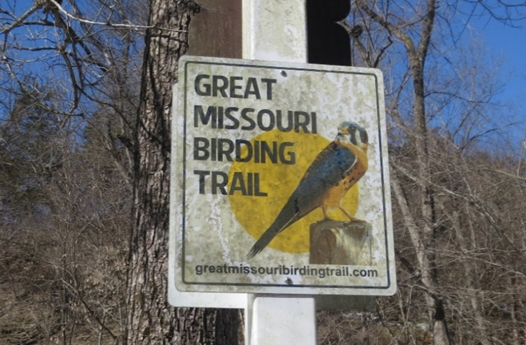
After the tour, we took a stroll around the grounds, following signs indicating “The Great Missouri Birding Trail”. Truthfully, it didn’t seem all that great, but it was a trail, and we enjoyed it. We found a little table in a corner in the sun and did a short meditation there. 

Then, it was back on road for the rest of the day. The rocky, hilly, lush lands of Missouri quickly changed upon entering Oklahoma. This state was much flatter, browner, and dustier. The whole vibe of Oklahoma was slightly forlorn and abandoned. There were smatterings of few-block towns with boarded-up businesses interspersed with gas stations and medical marijuana dispensaries. At least the abundance of cows and hawks along the roadsides and fields gave a sense of life to the land. Around 7:30 p.m., we arrived at the Blue River area in Oklahoma, though to me it felt much later. We couldn’t see all the details of the land, but we could hear a roaring river and found some really cool dispersed camping sites. In case you’re unfamiliar, dispersed camping isn’t camping in a campground with toilets, running water, or other amenities; it’s parking on National Forest or other public land. It’s free of charge, typically pretty private, and perfectly legal, as long as you follow parameters like not being too close to actual campgrounds or parks. This is the type of camping we would do for our entire trip.

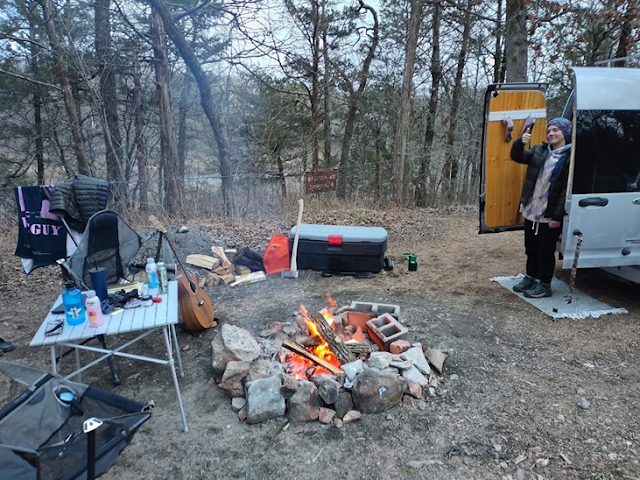
Tonight, we settled on Designated Campsite 4, which sat along that rapid river, tucked under the shade of mixed deciduous and conifer trees. We set up camp, made a fire, sat in our new Stargazer chairs to... well, gaze at the stars, then went to sleep.

Sleeping Spot: Blue River Fishing & Hunting Area, Tishomingo, Oklahoma

Wednesday, September 1, 2021

August (Poetry + Photos)

Welcome back to my (poetry + photos) series, where I share a poem I wrote about each month and include 10 nature photos I took during that month (of various years). Enjoy :)

Bald Eagle (adult)
Bald Eagle (juvenile)

The word "August" means

"To inspire reverence, wonder, and awe."

August is ripened wisdom,

And sun-browned skin.

It's knowing captured 

Under brilliant sunlight.

In a lifespan,

It's 55 or 60 years,

Where bright stories and humor

Weave life into pain.

It's earned marks of age,

Charming wrinkles,

And a few stray grays,

Sitting on vitality's edge.

The word itself sounds like "autumn",

But it's not there yet.

Just glimpses, at most.

August is that buoyant moment

In the pause before an exhale,

Like cueing up to jump off a rock,

Into a sparkling lake.

It's silent courage springing

Through the knees

And empowering the leap.

In the trees, it's a few spots of red,

Blushing coyly in the midday heat,

Or a few corkscrewing, yellow leaves

Dancing down one at a time,

Slow enough to be captured

In a photograph,

And unaccompanied by others.

In the birds, it's a trickling return

From the north,

One by one, day by day.

It's oriole song falling crystal and fluid,

Hidden by dense canopies of green,

Or Red-breasted Nuthatches,

Standing in for their pale-breasted kin,

To match the coming autumnal aesthetic.

August brings varied weather,

Gusting waves and winds,

Blankets of humidity weaving through

Cricket and cicada songs.

Hot, long, sticky days

Winding down

With dwindling bonfire flames.

Sometimes, there is rain,

Remembered from spring,

But now here to cool, sustain, and relieve,

Rather than to pull forth.

Feel August's fire now,

It's in the skin,

The belly,

And in the heart.

It's in the aging leaves,

The southward birds,

And in the now setting-setting sun.

(Aphrodite?) Fritillary Butterfly

Here are the previous months' poems:

January

February

March

April

(May-July are MIA... potentially because I'm less creative those months with my words, and more action-centered? LOL. Whenever I get them, I'll post them)

Barn Swallows Begging for Food

Wait For It...

Success!

Dead Crow's Foot

Purple Coneflower

White Admiral Butterfly
Lil Dude on Pictured Rocks

Tuesday, August 17, 2021

Behind the Lens: A Birder Interview with Beth Noren

Welcome back to my "Behind the Lens" series, where I interview local birders about their birding perspectives and experiences. I Love these interviews because they help shine light on the lesser-publicized part of what makes birding special - the peeps!

Introducing Beth Noren, my fellow birder and friend, pet bird owner, yoga enthusiast, native plant proponent, and cancer survivor, among other things. Let's dive into the interview where she'll tell you more.

Beth (right) with her friend Judy (left)

LBN: Hi Beth! So glad to have you on the blog. Let's start with the basics - how long have you been birding?

BM: I found eBird and signed up in 2013, but didn't really start birding until 2015.

If you're unfamiliar with eBird, go here. It's basically like the social media, online reference database, and GPS of the birding world, all wrapped into one. Also, I've inserted links throughout this article because Beth brings up a bunch of very cool stuff you should check out.

LBN: Yes, that's right! I remember you coming onto the scene just a few months or so after I did. Do you remember what it was that sparked your interest?

BM: I guess I had a few "spark birds" before the flame was fully lit. I remember the first time I saw a Northern Flicker in my yard. Polka dots, a crescent moon, and red splotch all on one bird!?! Had to buy a book and look that one up!

LBN: Oh my gosh, I Love how you describe that. Sounds like a work of art, but really, it is.

One of my photos of a Northern Flicker (for reference)

BM: After the flicker, my husband Gary and I were at the Detroit Zoo and saw these strange, hunched-up wild birds that didn't look like they belonged in Michigan. We found out they were called Black-crowned Night Herons. I started wondering how many other wild birds were out there that I had never seen. 

LBN: Gosh, I know that feeling. My spark bird situation was similar, like, "What else am I missing!?"

BM: Exactly! Two years later, we met another local birder, Brandon, and were amazed when he ID'd an Eastern Bluebird by a distant chip call, and then we actually saw it! That was what really got us going. 

LBN: We've talked about your spark birds. How about favorite birds? Do you have any and why?

BM: Favorite pet bird is the African Grey Parrot, followed by any other parrot. Favorite bird I've never had? Monk (Quaker) Parakeet. Favorite non-pet bird? Brown Thrasher. First one that Gary and I found gave us one brief glimpse, then followed us down a hedgerow, keeping completely out of sight, but mimicking me each time I made kiss noises in its direction. I Love how smart they are, and how they look kind of mean, like they're sizing you up.

LBN: Brown Thrashers... YES! They are so beautiful, and talented little songsters. On the pet bird topic, I actually don't know many birders who have pet birds. Does keeping birds help you learn more about wild birds, or vice versa? Do the two hobbies intersect at all?

BM: I've had pet birds most of my adult life. My Grey Parrot, Max, was the love of my life. I lost her to a virus after 21 years together (she was about 31). Living with pet birds, I often wonder if other birders understand the depth of bird intelligence and emotions, or if they just seem like pretty automatons to them. Parrots are known for this, but even my little Zebra Finches had personalities. Conversely, seeing the interesting, challenging lives of wild birds has made me realize how much our pets have lost in the deal for a safe life with humans, and the importance of enriching their lives as much as possible, through toys, foraging, etc.

African Grey Parrot

LBN: Wow, those are amazing insights. I Love that. I've never had pet birds myself, but personally, I don't see birds as automatons. I like to assume everything in this world might have more intelligence than what meets our limited eye/perception. On a semi-related note, if you were a bird, which one would you be and why?

BM: First thought is a warbler that winters in the Caribbean, but those islands are goners when the oceans rise, so maybe something that spends winters in Central or South America, and summers in Northern Canada. And lives a long time. Which makes me an American White Pelican, lol! Nah, I'll just say Brown Thrasher.

LBN: Hahaha. I Love that your first thought was to choose based on migration and climate. Not a bad way to go. Do you have any dream bird sightings?

BM: I would Love to see wild Grey Parrots one day.

LBN: Nice. Well, we've covered the basics and talked about some fun stuff, but let's switch gears a bit. What are your thoughts on birding throughout a global pandemic?

BM: Birding during the pandemic was great! Gary had three months off from work, during spring warbler season no less! Crowds were down at the parks, and as always, birding provided a great distraction from worry. So glad that our hobby was a relatively safe outdoor one.

LBN: Truly. It was a blessing to be able to continue our hobby in full force. You mention your husband Gary, who I know of course. How is it being part of a birding couple? There really aren't too many out there.

BM: It's good and bad, but mostly good. We enjoy sharing the excitement of a good find. Gary is better than me at spotting birds, and I'm better at hearing them. It helps to have two sets of eyes and ears. I get some extra motivation and competitiveness from Gary. He gets me moving when I'd rather sit on the couch. I am less nervous birding isolated parks alone now than I was at first, but I also appreciate feeling safer when he's with me. And if I am birding alone in an iffy spot, I usually text him when I start, and let him know when I'm done. One hard part is our different birding styles. I'm sometimes more of a "take time to smell the roses" type of birder, while he's sometimes more of a "get it done" type (although we both appreciate a nice bench). Most of the time, birding together makes IDing easier but it can also go the other way. Bad IDs feel validated when either of us just trusts the other and doesn't look closely enough and protest. And good IDs can get squashed by disagreement. In the end, if we don't agree on a bird, we leave it out.

LBN: So, double the senses, double the safety, and double the opinions on things. Hahaha. Sounds like a mostly-good combo. How about time of year? What's your favorite time of year to bird?

BM: Early spring and late fall, when it's cooler and no mosquitoes. Also I Love the November rarities.

LBN: Those are great times. I Love how birding helps us appreciate those transition seasons, I think even more than the "destination" ones like summer. Let's get deep now, with one of my favorite questions to ask. What's the biggest lesson or lessons you've learned from birds or from Nature?

BM: Be where you're at. Drink it all in, appreciate it, and then, go one more step and do something to help it. Read Doug Tallamy. Plant native flora. Reduce or eliminate the lawn. Ditch the lawn chemicals. The birds we all love need insects to survive, and they aren't getting them from non-native, sprayed yards. Bird populations have declined so much just in my own lifetime. If all I do is post lists and take pics, I am just a rubber-necker at a train wreck. Help them. It's not just the Amazon that's in trouble, it's Macomb County. So many of our go-to birding spots have been bulldozed just since we started looking in 2015. I may not be able to stop that, but I am trying to help mitigate those losses by making changes on my own property. I'm eliminating invasive species. I've reduced the amount of lawn. I still have a few hostas and a peony, but I've added lots of native flowers, and more importantly, shrubs. It was so satisfying this year to watch the robins enjoy the bumper crop of fruit on my Dogwoods. My yard is tiny, but if you have the room to add one big tree to your property, make it a native oak. Hosts way more pollinators than any other plant! If you can, add some native plants underneath it that get mulched by the leaves. Many caterpillars cocoon in the fallen leaves and will then be able to hatch without getting chopped up by a lawn mower or raked up and sent to a compost pile. I have gone through the U of M Herbarium website and made a list of plants that are native to Macomb, Oakland, and Wayne counties. I'm no expert, but I'm happy to share what I've learned so far with anyone who wants to get started on their own yard! My email is maxgoodbird@gmail.com.

LBN: Wow. That's... an amazing answer.

If you're reading this, you should go back and read that answer again. It's important.

LBN: I Love the idea of doing what you can to make your yard less pristine, less controlled, and cater more to wildlife. We take so much from them, and I've seen it too. Giving back on our own properties really is something we can control. So many people feel pain when they think about habitat loss and mass extinctions and all of that stuff, but they feel helpless to change it. I really appreciate this perspective you have, that we are not helpless. Change starts right outside our windows. I think there's poignant truth and beauty in that.

Just a little aside here, before I get into the last topic. Since discovering birding, it's been more than just a hobby. I've used it to gain clarity, to slow down, to connect back to things that feel real and true and important, and to move through some difficult times, including my mom's breast cancer, and my own battles with anorexia and Adderall addiction. The way I see it, you can go through anything difficult in life and you'll feel a whole lot better processing it out in the woods surrounded by fresh air, the sounds and sights of wildlife, and the comfort of the trees, rather than sitting cooped up inside four walls and dealing with those same things. I know Beth has used birding and Nature to move through her own struggles with cancer and depression, so I wanted to open up the floor for her to share anything she wanted to about that. I hope it inspires you if you're going through something difficult.

LBN: You've come to some of my yoga/birding/journaling workshops, and we've talked about how birding and Nature means more to us than meets the eye. I know we have many similar thoughts when it comes to the power of Nature, movement, gratitude, and awareness. So at this point, why don't you share what birding has done for you in the context of making it through some of life's darker moments.

BM: I was diagnosed with breast cancer back in 2016, near the start of my birding journey. Deep down, I had a sense that my overall depression, inactivity, and mental health slump had contributed to this diagnosis, manifesting in physical ways. With encouragement from my husband Gary, excitement from the start of my birding journey (as you've already heard), and regular practice, I really did start to welcome the idea of getting up, getting outside, and using birding to stay active, find distraction from that scary diagnosis, and keep my spirits positive. Every time we went birding, we saw something different. Swans on the pond, beautiful sunsets, snakes, deer, turtles, muskrats, even mink! It was such an interesting soap opera of wildlife. I didn't want to miss anything. I decided that I wouldn't let this stupid cancer thing ruin warbler season, or the rest of my birding year. I walked and birded while waiting for chemo to start. Gary took my chemo days off and we birded after each treatment. My memories of my summer of chemo are of Macomb County's second recorded Kirtland's Warbler, of an elusive Prothonotary Warbler landing in the bush next to me when I sat down and stopped searching for it, of an enthusiastic new friend, Wayne Hoch (check my interview of Wayne here), dragging me by the arm to make sure I didn't miss seeing the Yellow-breasted Chat. My memories of surgery are of birding Metro for four hours the next day, and three days post-surgery doing a faceplant while running to get the newly refound Nelson's Sparrow. Gary told me not to run! Each milestone in my treatment seems to have been marked by a special bird. Birding helped me through my cancer chapter, and helped lift me out of depression by making me care about the world again. Fast forward five years, my health is good, I'm at a crossroads, and my life now needs my attention. To keep birding at that pace would be avoiding what needs to get done now. But I really don't want to slide back into the inactivity that helped me get sick in the first place, so now I'm trying to find a healthy balance.

LBN: That's beautiful, Beth! I won't add too much to that because I think you've shared so much of value already. However, I will leave people with a poem that I know has meant a lot to you.

Looking at that Nelson's Sparrow

Hope Is the Thing with Feathers

By Emily Dickinson

"Hope" is the the thing with feathers -

That perches in the soul -

And sings the tune without the words -

And never stops - at all -

And sweetest - in the Gale - is heard -

And sore must be the storm -

That could abash the little Bird

That kept so many warm -

I've heard it in the chillest land -

And on the strangest Sea -

Yet - never - in Extremity,

It asked a crumb - of me.

Swans on the pond


Prothonotary Warbler

Killdeer mom & babies


Friday, June 25, 2021

This June's Full Moon


Of all the things I Love in this world (and there are many), I really Love noticing the patterns and cycles in Nature, and figuring out how they relate to us as humans.

One of the fun ways to explore this connection is through astrology (think, "as above, so below"). Even though I pay attention, I don't necessarily live my life based on astrological themes. Rather, I like to read about these starry, cosmic metaphors, then decide which ones I want to ponder. I feel like the "magic" is always in my hands, but I pay attention to the themes as hints, reminders, and synchronistic signs.

The reason I bring this up is because we just had a full moon, sometimes known as the Strawberry Moon (for the time of year where strawberries are in season), and astrologically, a full moon in the sign of Capricorn.

While I was doing my usual (Instagram) research on what this full moon represented, I saw a lot of things about balance, finding a positive attitude toward work, working toward goals, and being joyfully industrious. These are sort of traditional "Capricorn-ish" themes.


The more I thought about it though, the more I realized these Capricorn themes make so much sense in the context of Nature...


As we move into the first official weeks of summer, birds are raising and feeding their young. 

Bees and butterflies move from bloom to bloom, pollinating and laying their eggs, in turns.

Wildflowers bloom, grasses grow, and trees dance with the weight of their fullest branches.

The world feels just that - joyfully industrious.

So building on that energy, maybe we can feel it too.

Sunday, May 23, 2021

Beginner's Mind for the Win

Eastern Wood-Pewee
Eastern Wood-Pewee

Ever hear the term "beginner's mind?" It's that thing when you first start out on a pursuit, where everything is new, your mind is open, and your eyes are wide and fresh. There's a term for this in Zen Buddhism, too. It's called "shoshin," lacking preconceptions and studying with eagerness, as if the subject is brand new (even if it isn't). There's also a tarot card with this message, called The Fool, and fittingly, it's card zero, the first card in the deck.

I've always loved the concept of beginner's mind because I connect deeply to the importance of moving through the world with a wide perspective, open senses, and a default state of wonder and curiosity. This is what allows me to never be bored, to enjoy the simplest things with the deepest reverie, and to feel at least partly like a child. It lets me change my views, challenge what I think I know, and always be learning.

A view to the sky
Growth

As I was birding tonight, I was reminded of the importance of beginner's mind. I was walking through the woods, and was suddenly struck by the sense that I was moving too quickly. I thought back to my first years of birding. When May would come around with spring migration, it was an explosion for the senses, an overload of birds. Walking through one small stretch of woods during spring migration took forever, because I was captivated by every tiny movement, every chip and chirp, and every glimpse I could get with the naked eye, my binos, or my camera. When I didn't know what birds I was seeing and hearing, it was imperative I look at every one and notice as much as I could. This let me go home later and do my research to try to identify what I'd seen. As I sat at home after a day of spring birding, I'd have audio hallucinations, a canopy of birds dwelling between my ears.

Racoon
Raccoon on the Move

Mallard nest
Mallard nest

These days, while I'm no birding expert, there are plenty of birds I can identify without deep study. I know them by a flash of movement, a partial song, or general clues based on habitat, time of year, and observed behaviors. I can move through that same patch of woods on a bustling May day much quicker, pulling out a good number of confident IDs. This was happening tonight, but my approach suddenly felt so wrong. I remembered about beginner's mind, about all that careful study.

So I purposely slowed down, stopped, even. I took a deep breath and blurred my vision a little, simply letting my eyes pan out wide. Sometimes, I'd pick up my binoculars and move my gaze slowly through brambles and underbrush, stopping frequently to observe what was there. This was the feeling I needed. Slow, receptive, curious, hyper-aware, and never taking a thing for granted.

Raindrops
Rain

The greatest birders don't claim to know it all. They don't go into a patch of woods expecting only the expected birds. They expect anything or nothing, but they watch everything.

This goes for life too. 

So here's your reminder to slow down, erase what you think you know and expect, and open yourself up to more. Sure, it's valuable to be an expert at something, but it's so much fun to stay a beginner.

Red-headed Woodpecker

Pileated Woodpecker
Pileated Woodpecker